
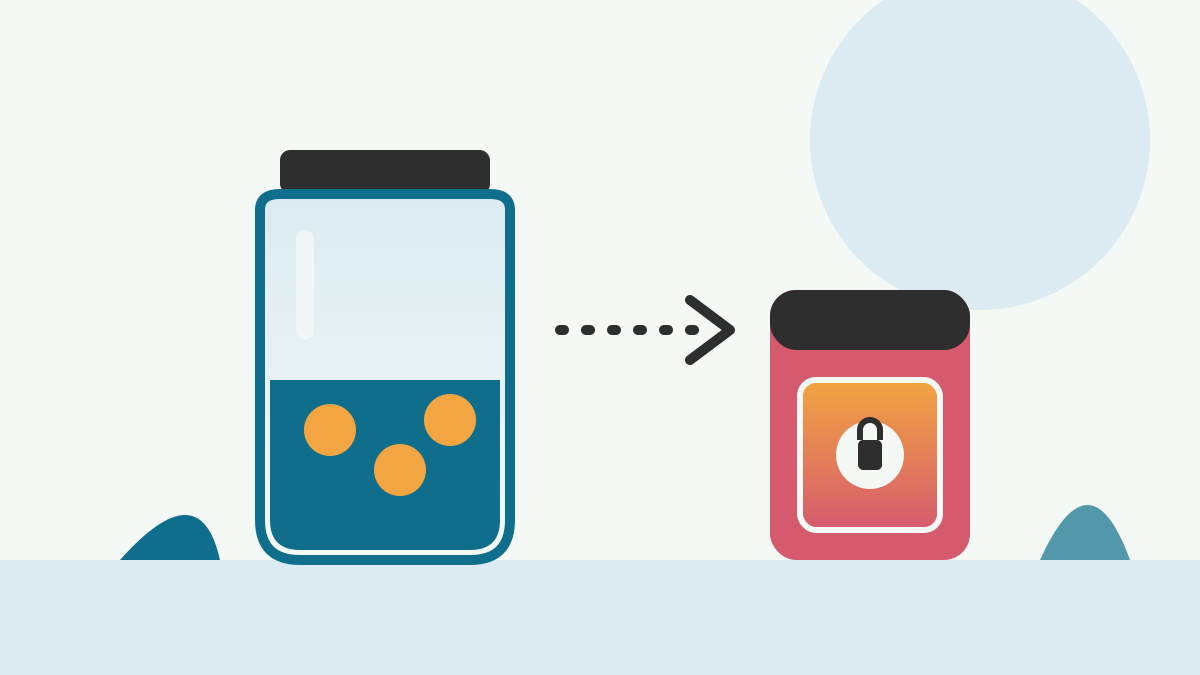
The simplest way to set aside money for taxes is to move a fixed percentage of every payment you receive into a separate account the day it arrives. You pick the percentage based on an estimate of what you will owe, then adjust it as the year goes on. The habit matters more than the exact number, because money you never see in your spending account is much harder to spend by accident.
Why Self-Employed Income Needs a Different Approach
An employee usually has tax taken out of each paycheck before the money lands in their account. When you work for yourself, that step often disappears. Clients pay you the full amount, and the responsibility for paying tax shifts to you. In many countries, self-employed people may also owe contributions that an employer would normally share, such as social insurance or pension payments.
The risk is easy to see. A strong month feels like extra cash, but part of it was never really yours to keep. If you spend it, you may face a large bill months later with nothing set aside to cover it.
Choosing a Starting Percentage
There is no single correct figure, because tax rules differ by country and region and change over time. A reasonable starting point is to look at what you owed last year, if you have a prior return, and divide it by your income for that year. That gives you a rough effective rate you can use as a baseline.
If this is your first year, you can review the official guidance from your tax authority or speak with a qualified tax professional to get an estimate. Many people choose to round up rather than down. Ending the year with a small surplus in your tax fund is far easier to handle than coming up short.
Factors that can change your number
- Whether you have other income, such as a part-time job
- How much you spend on deductible business expenses
- Whether your region requires estimated payments during the year
- Changes in your income from one year to the next
A Worked Example
Illustration only, using hypothetical numbers. Suppose you decide to set aside 25% of every payment. A client pays you $2,000. You transfer $500 into your tax account and keep $1,500 for business costs and personal pay.
Over a month, you receive four payments:
| Payment | Amount received | Set aside (25%) | Available to use |
|---|---|---|---|
| 1 | $2,000 | $500 | $1,500 |
| 2 | $800 | $200 | $600 |
| 3 | $1,200 | $300 | $900 |
| 4 | $1,000 | $250 | $750 |
| Total | $5,000 | $1,250 | $3,750 |
By the end of the month, $1,250 sits in a separate account, ready for whenever a payment is due. The percentage stays the same whether a payment is large or small, which keeps the routine simple.
Making the Habit Stick
A separate savings account used only for taxes helps keep the money out of sight. Some people prefer to make the transfer on the same day each week instead of after every single payment. Either approach works as long as you stay consistent.
It also helps to check in every few months. Compare your total income so far with your tax fund and ask whether the balance still looks right. If your income grew faster than expected, you may want to raise the percentage for the rest of the year.
Common Mistakes
- Waiting until the end of the month: by then, the money may already be spent.
- Borrowing from the tax fund: treat it as money that belongs to someone else.
- Forgetting about deadlines: some places expect payments several times a year, not just once.
- Never reviewing the rate: a percentage that fit last year may not fit this one.
Setting aside money for taxes is less about precision and more about routine. Start with a sensible estimate, move the money as soon as it arrives, and revisit the figure as your income changes. Over time, the tax bill becomes just another planned expense rather than a stressful surprise.